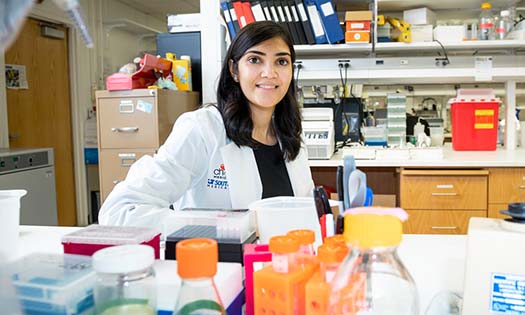
Diagnosing and treating familial chylomicronemia syndrome (FCS) – a rare autosomal recessive disorder that affects about 1 in 300,000 people throughout the world – is extremely challenging. “Because FCS is so rare, diagnosis is often missed until patients have a high risk of recurrent life-threatening pancreatitis,” says Nivedita Patni, M.D., Pediatric Endocrinologist at Children’s HealthSM and Assistant Professor at UT Southwestern. Dr. Patni leads The Lipid Clinic at Children’s Health, a specialized referral center for children with FCS and other rare pediatric lipid disorders. The clinic sees complex cases from across the country precisely because of the depth of expertise available there.
Dr. Patni recently served as the only pediatric lipidologist on an international task force convened by the National Lipid Association (NLA). The panel provided the first-ever expert clinical review of FCS treatment approaches for patients from infancy through adulthood, including during pregnancy.
She also helped develop the North American FCS (NAFCS) Diagnostic Score, a validated clinical tool developed to help providers more accurately identify FCS and distinguish it from other causes of severe hypertriglyceridemia. The NAFCS Score represents a critical step toward reducing the diagnostic delays that have historically left many FCS children without appropriate care.
The current picture: No drug treatments for children
Currently, two medications – olezarsen and plozsarin – are FDA-approved to treat FCS in adults. Doctors also use orlistat, a weight loss medication, off-label to reduce dietary fat absorption in adults. But there are no FDA-approved medications for children at this time. This may change as Dr. Patni continues her work in the only national clinical trial studying orlistat as a potential treatment for children with FCS. The study is still enrolling pediatric patients.
For now, the only way to manage the disease in children is by restricting fat intake to 10-15 grams per day.
What to know now: Insights on managing FCS in children
Dr. Patni researched and wrote the pediatric section of the clinical review, which addresses challenges providers face when using the low-fat diet to manage FCS in children.
Dietary restrictions: Bottle-fed infants often need very low-fat formulas with medium-chaintriglycerides (MCT), while breastfeeding infants may need to supplement with MCT formulas. A dietitian can help guide the transition to solid foods.
Supplements: Children with FCS must take supplements to ensure they get enough essential fatty acids and fat-soluble vitamins.
Effects on neurodevelopment: While neurodevelopment delays from the restricted diet are rare, children with FCS should get regular screenings to identify any concerns.
Family education: A child’s dietary limitations can be overwhelming for families. A dietitian can teach parents and older children how to read food labels and prepare low-fat meals.
Patient and family support: FCS can exact a significant emotional toll. “Mental health support is important, especially as a child enters the teen years and struggles with wanting to enjoy the same foods as their peers,” says Dr. Patni.
A step forward: Making FCS diagnosis easier
FCS diagnosis typically starts with a review of clinical symptoms and blood tests that measure triglycerides and apolipoprotein B. But this can’t distinguish FCS from multifactorial chylomicronemia syndrome (MCS), which is the most common cause of severe hypertriglyceridemia.
Genetic testing is the gold standard for diagnosis. But, because of high costs and insurance issues, there’s often a delay from symptom onset to genetic testing. “Too often, patients suffer with painful recurrent pancreatitis and other complications while they wait,” says Dr. Patni.
To expedite the diagnostic process, the NLA task force developed an easy-to-use, validated tool, called the North American FCS (NAFCS) Score, that helps providers determine the likelihood that a patient has FCS without the need for genetic testing. The tool can also help determine which patients might benefit from genetic testing or help make an FCS diagnosis when genetic test results aren’t clear.
The NAFCS Score factors in a patient’s age, body mass index, history of pancreatitis, blood lab values and secondary factors that may contribute to hypertriglyceridemia. A January-February 2025 Journal of Clinical Lipidology article further explains the diagnostic criteria.
Why Children’s Health Pediatric Lipid Disorders Program
The Lipid Disorders Program at Children’s Health is part of its nationally recognized Pediatric Endocrinology Program. As a child reaches adulthood, they transition to ongoing care at UT Southwestern Medical Center.
Refer to us when you suspect FCS or need a specialized team to manage complex genetic dyslipidemias and enroll patients in novel research.